

If you run a plumbing business in Melbourne, a roofing company in regional Victoria, a childcare centre in Shepparton, or an NDIS service in Ballarat, one question matters: Can local customers find your business when they search on Google?
Imagine someone searching for “emergency plumber near me”, “roof restoration Toowoomba”, or “childcare centre near me”. They are already looking for a service. If your business appears prominently in the search results, you have an opportunity to turn that search into a phone call, website visit or customer enquiry.
But if your competitors appear first and your business is nowhere to be seen, you could be missing valuable opportunities.
This is where local SEO comes in.
Local SEO helps Australian businesses improve their visibility in Google Search and Google Maps when people look for products or services in a particular area.
In this practical guide, you will learn what local SEO is, how Google’s local results work, how to optimise your online presence, and what you can realistically expect from investing in local search optimisation.
Whether you are a tradie, home service provider, childcare operator or another local business owner, these steps will help you build a stronger foundation for attracting customers online.
What Is Local SEO?
Local SEO, or local search engine optimisation, is the process of improving your business's visibility in search results for location-based searches.
Traditional SEO focuses on improving a website's visibility across a broader range of searches. Local SEO places additional emphasis on your service area, business location, Google Business Profile, customer reviews and local relevance.
For example, consider these searches:
- Plumber in Melbourne
- Roof restoration in Toowoomba
- Electrician near me
- House painter in Shepparton
- NDIS support provider in Ballarat
- Childcare centre in Geelong
Each search suggests that the person wants a service in a specific location or near their current position.
Local SEO helps search engines understand three important things:
- Who you are: The services or products your business offers.
- Where you operate: Your physical location or the areas you serve.
- Why customers should trust you: Your reputation, website quality, reviews and other credible business information.
The objective is not simply to increase website traffic. It is to help the right people discover your business when they are looking for the services you provide.
For many Australian small businesses, this can become an important source of calls, quote requests, bookings and sales.
Why Local SEO Matters for Australian Small Businesses
Large companies often have bigger marketing budgets, established brands and dedicated marketing teams. However, local businesses can still compete by building a strong presence in their relevant service areas.
A well-maintained local SEO strategy can support your business in several ways.
1. Reach customers who are actively searching
Someone searching for “roof repairs in Bendigo” may already have a leaking roof and need assistance.
That search represents a different level of intent from someone casually browsing roofing ideas on social media.
By improving your visibility for relevant local searches, you give potential customers another way to discover your business when they need your services.
2. Generate enquiries without paying for every click
With Google Ads, you generally pay when someone clicks an ad, according to your campaign's billing model.
Organic local search visibility does not charge you a fee for each organic click. However, earning and maintaining that visibility still requires investment in content, website improvements, reputation management and ongoing SEO work.
Over time, a strong organic presence can become a valuable additional source of customer enquiries.
3. Build trust before the first conversation
Customers often compare several businesses before making a decision.
They may review your Google Business Profile, read customer feedback, inspect your website and check whether your services match their requirements.
Accurate information, genuine reviews, useful service pages and clear contact details can help people feel more confident about contacting you.
4. Compete in your local market
A small roofing business does not necessarily need to rank nationally to grow.
It may be more commercially valuable to attract relevant enquiries in Melbourne's western suburbs or across a defined regional service area.
The same principle applies to electricians, landscapers, fencing contractors, childcare centres and NDIS providers.
The goal is to become visible where your potential customers are searching, not to chase traffic from everywhere.
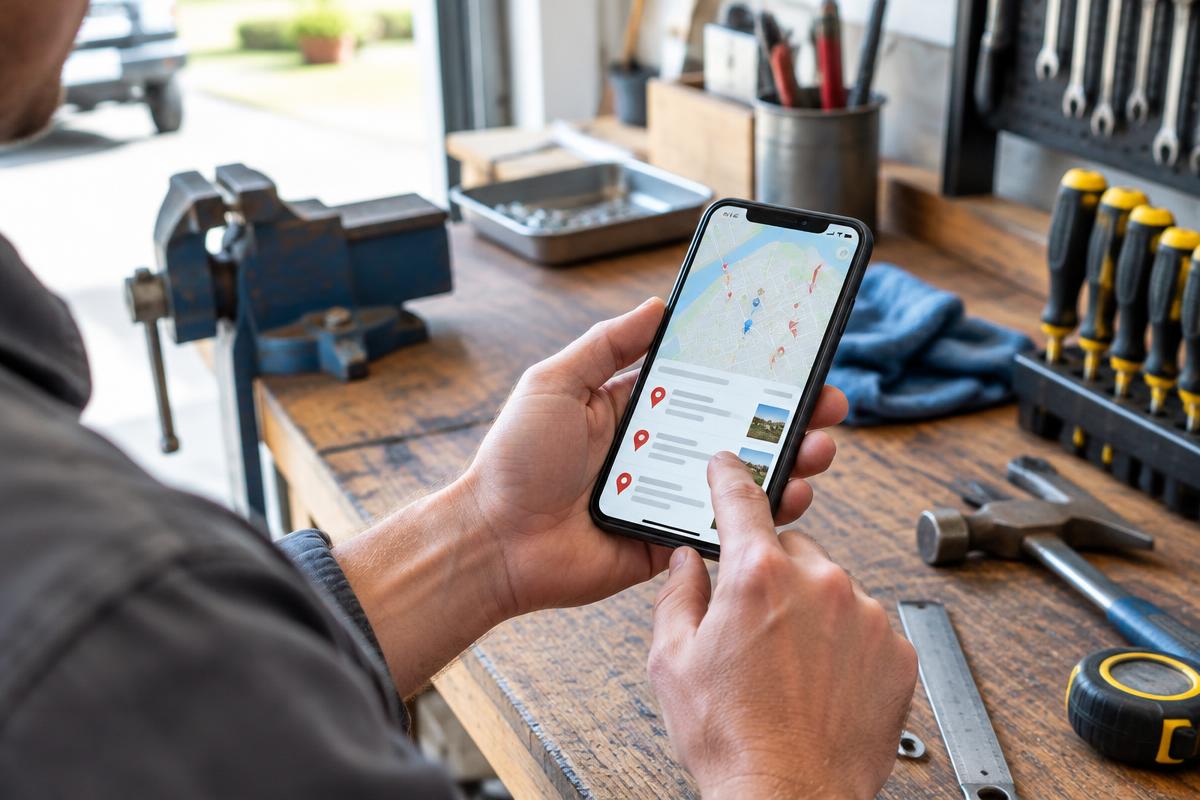
Understanding Google's Local Map Pack
One of the most valuable parts of local search is the Google Map Pack, sometimes called the local pack.
This is the section of Google Search that can display a map alongside a small number of local business listings.
Depending on the search, these listings may include:
- Business names
- Customer ratings and reviews
- Business categories
- Addresses or service-area information
- Opening hours
- Phone numbers
- Website links and directions
For example, someone searching for “plumbers in Melbourne” may see a map and several plumbing businesses before reaching the traditional organic website results.
Appearing prominently in these results can help a business attract attention and enquiries.
However, there is an important distinction: ranking in the Map Pack is not the same as ranking in the regular organic search results.
Google uses different systems and signals for local results, and a business can perform well in one area without holding the same position in the other.
Google identifies three broad factors for local ranking:
- Relevance: How well a business matches what someone is searching for.
- Distance: How far the business is from the searcher or the relevant location.
- Prominence: How well-known or established the business appears to be, based on available information.
These factors explain why local rankings can vary between suburbs and even between different searchers.
You cannot guarantee a top-three Map Pack position simply by adding keywords to your website. A more effective strategy is to improve the overall quality, relevance and credibility of your local online presence.
The 6 Key Elements of Local SEO
Local SEO works best when several elements support one another. Focusing on just one activity, such as publishing blog posts, is unlikely to address every issue affecting your visibility.
1. Optimise Your Google Business Profile
Your Google Business Profile is one of the most important starting points for local SEO.
It allows eligible businesses to manage how they appear on Google Search and Maps. Customers may use this information to call you, visit your website, request directions or learn more about your services.
Start by checking the following:
Business information
- Use your real business name.
- Select the most accurate primary business category.
- Add relevant secondary categories where appropriate.
- Enter the correct phone number and website.
- Keep your opening hours and holiday hours up to date.
- Provide an accurate business address if customers visit your premises.
Services and business description
Describe the services you actually provide. A plumbing business, for example, might offer hot water repairs, blocked drain services, general plumbing and emergency plumbing.
Use the available service fields to explain your offering clearly. Avoid adding keywords or locations to your business name unless they are genuinely part of the business's real-world name and comply with Google's guidelines.
Photos and updates
Add genuine photos of your team, completed projects, premises or work equipment where appropriate. Publish useful updates when you have something relevant to share.
For service-area businesses, make sure your profile reflects how you actually operate. If you visit customers rather than receiving them at your premises, Google's service-area business rules may apply.
A complete and accurate profile helps Google and potential customers better understand your business.
2. Make Your Website Relevant to Your Services and Locations
Your website should clearly explain what you do, who you serve and where you operate.
A common mistake is building one generic page that mentions every service and every suburb. This can make it difficult for search engines and customers to understand the specific services you offer in each location.
A better website structure might look like this:
- Homepage: Your main service offering and business coverage.
- Service pages: Detailed information about each core service.
- Location pages: Relevant locations you genuinely serve.
- About page: Your experience, team and business background.
- Contact page: Clear contact details and enquiry options.
- Supporting articles: Answers to common customer questions.
For example, a roofing company could have separate pages for roof restoration, roof repairs and gutter replacement.
Each page should explain the service, common problems, your process, relevant project examples and the next step a customer can take.
Use local keywords naturally
If your target keyword is “roof restoration in Toowoomba”, include that phrase naturally in the page title, main heading and relevant body content.
You can also cover related questions, such as:
- What does roof restoration involve?
- Which roofing materials can be restored?
- What signs indicate that a roof needs attention?
- What factors affect restoration costs?
- What should homeowners ask a roofing contractor?
The aim is to create a genuinely useful page, not to repeat the same keyword as many times as possible.
Important: Do not create dozens of nearly identical location pages just to target suburb names. Each page should provide meaningful local value and accurately represent your services.

3. Earn Genuine Google Reviews
Reviews can influence how customers evaluate your business and are one of the factors associated with local prominence.
A consistent process for requesting honest feedback can help you build a stronger reputation.
After completing a job or providing a service, send the customer a polite message with a direct link to your Google review page.
For example:
“Thank you for choosing us for your recent service. We appreciate your support. If you have a moment, we would be grateful if you could share an honest review of your experience on Google.”
Make the process easy and follow up respectfully where appropriate.
When customers leave reviews, respond professionally. Thank customers for positive feedback and address negative feedback calmly. Avoid sharing private information in public responses.
Never buy fake reviews, offer incentives in exchange for positive reviews or pressure customers to leave only favourable feedback. These practices can undermine trust and violate platform policies.
A smaller number of genuine, detailed reviews is more valuable for long-term reputation building than an artificial collection of ratings.
4. Build Consistent Local Citations
A local citation is a mention of your business information on another website or directory. It may include your business name, address and phone number, often called NAP.
Examples of potential citation sources include relevant Australian business directories, industry associations, local business organisations and professional listings.
The key is accuracy and relevance.
Check that your business name, phone number, website and address are consistent wherever they appear. If your business moves or changes its contact details, update important listings.
You do not need to submit your business to every directory you can find. Low-quality or irrelevant directory submissions are not a substitute for a strong website and a credible business profile.
Prioritise reputable sources that customers or industry professionals might genuinely use.
5. Improve Your Website's Technical SEO and User Experience
Even a well-written website can struggle if search engines cannot access it properly or visitors find it difficult to use.
Check the following areas:
Mobile usability: Your website should be easy to read and navigate on a mobile phone. Many local customers search while travelling, comparing providers or dealing with an immediate problem.
Page speed: Compress oversized images, minimise unnecessary scripts and address performance problems that affect the user experience.
Secure website: Use HTTPS and keep your website platform and essential software updated.
Search indexing: Check that important pages can be crawled and indexed. Google Search Console can help identify indexing issues and report on search performance.
Clear calls to action: Make it easy to call, request a quote, book an appointment or submit an enquiry.
For a plumbing or roofing business, a visible phone number and a straightforward quote request form can be especially important.
For a childcare centre, parents may want to enquire about vacancies or arrange a tour. For an NDIS provider, visitors may want to understand available supports and eligibility before contacting the organisation.
Your website should reflect what your customers actually need to do next.
6. Create Useful Content That Answers Local Customer Questions
Content marketing supports local SEO by helping customers find answers and understand your expertise.
Instead of publishing articles solely to include keywords, focus on the questions your customers regularly ask before making a decision.
For an Australian roofing company, useful topics could include:
- How to recognise signs of roof damage after a storm.
- Roof restoration versus roof replacement: What is the difference?
- What factors influence roof restoration costs in Victoria?
- How often should gutters be inspected and cleaned?
- What should homeowners check before hiring a roofing contractor?
For a childcare centre, useful topics might cover centre tours, enrolment processes, questions parents should ask and how to evaluate a centre's learning environment.
For an NDIS provider, content could explain the services offered, how referrals work, what to expect during an initial conversation and which participants the provider supports.
Any information about NDIS eligibility, funding or regulated requirements should be accurate and kept up to date.
Useful content can attract relevant visitors, support your service pages through internal links and help potential customers make informed decisions.
Quality matters more than publishing a large volume of repetitive articles.
Local SEO Examples for Australian Industries
Different industries need different local SEO strategies because their customers search in different ways.
Trades and home services
Roofers, plumbers, electricians, painters, landscapers and fencing contractors often rely on calls and quote requests.
Priorities include:
- An accurate Google Business Profile.
- Clear service pages for the work you actually offer.
- Relevant local landing pages.
- Genuine reviews and project photos.
- Easy-to-use phone and quote request options.
- Useful content answering common repair and maintenance questions.
For example, a roof restoration company targeting Toowoomba should build a page that explains its restoration services, suitable roofing materials, process, relevant local experience and how customers can request an inspection.
The objective is to attract homeowners looking for that service, not simply visitors searching for general roofing information.
Childcare centres
Childcare SEO should focus on helping families find and evaluate a suitable centre.
Important areas include:
- Accurate centre information and opening hours.
- Clear age groups and educational programs.
- Enrolment and tour enquiry pages.
- Relevant local search terms.
- Helpful information for parents.
- Genuine reviews and a clear explanation of the centre's offering.
A centre might target relevant searches such as “childcare in Shepparton” or “childcare centre near me”, depending on its actual location and service area.
NDIS providers
NDIS providers should help potential participants, families, support coordinators and referrers understand their services.
Useful priorities include:
- Clearly describing the supports provided.
- Explaining the service locations and coverage.
- Providing accessible contact and referral options.
- Publishing accurate, helpful information.
- Building trust through transparent business information and relevant experience.
Avoid making unsupported claims about funding eligibility, guaranteed outcomes or registration status.
Across all three industries, the foundation is the same: accurate information, useful content, a trustworthy online presence and a straightforward path to enquiry.
How Long Does Local SEO Take to Show Results?
Local SEO is a long-term marketing activity, and there is no universal timeline for ranking improvements.
Some businesses may notice early changes within a few weeks after correcting significant profile or website issues. Others may need several months of consistent work before they see meaningful improvements.
Your starting position, competition, location, website quality, business reputation and service demand all influence the outcome.
A practical way to approach the first six months is to work through stages.
Month 1: Build the foundation
- Audit your website and Google Business Profile.
- Correct inaccurate business information.
- Identify the most valuable services and locations.
- Fix major technical and mobile usability issues.
- Establish baseline performance measurements.
Months 2–3: Improve relevance and trust
- Improve priority service pages.
- Develop useful location pages where justified.
- Introduce a consistent review request process.
- Correct important directory listings.
- Publish content that answers customer questions.
Months 4–6: Measure and refine
- Review Google Search Console performance.
- Track calls, quote requests and other relevant enquiries.
- Identify pages gaining visibility and pages needing improvement.
- Strengthen internal links and useful supporting content.
- Refine the strategy based on actual results.
This is a planning framework, not a guarantee. Some businesses will progress faster, while highly competitive markets may require a longer period of investment.
How to Measure Whether Local SEO Is Working
Ranking positions alone do not tell you whether your marketing is generating business value.
A more useful measurement framework looks at visibility, engagement, enquiries and commercial outcomes.
Track these metrics where relevant:
Search visibility
- Impressions and clicks from Google Search Console.
- Search queries bringing visitors to your website.
- Performance of important service and location pages.
Google Business Profile
- Available profile performance data, such as searches and customer interactions.
- Calls, website clicks and direction requests where relevant.
Lead generation
- Phone calls from potential customers.
- Quote request forms.
- Booking and consultation enquiries.
- Qualified leads by service and location.
Business outcomes
- Leads that become customers.
- Revenue generated from acquired customers.
- Cost per lead when comparing SEO with paid advertising.
- Return on investment, using a consistent attribution method.
Where possible, use call tracking, properly configured website analytics and consistent UTM parameters to understand how people discover and contact your business.
Be careful not to count every click, call or form submission as a qualified lead. Existing customers, spam enquiries and irrelevant requests should be separated from genuine sales opportunities.
For a local business, the most important question is not simply, “Did our rankings improve?”
It is: Did our local visibility help generate more valuable customer enquiries and profitable work?
Common Local SEO Mistakes to Avoid
Many small businesses invest time in SEO without addressing the fundamentals.
Avoid these common mistakes:
1. Keyword stuffing
Repeating the same location and service phrase unnaturally can make content difficult to read and does not guarantee better rankings.
2. Creating duplicate location pages
Publishing almost identical pages for every suburb can create a poor user experience. Each location page should serve a genuine purpose.
3. Ignoring Google Business Profile
An incomplete or inaccurate profile can leave customers without essential information about your business.
4. Buying reviews or links
Artificial reviews and manipulative link-building schemes can damage trust and create policy risks.
5. Expecting instant results
Organic visibility generally requires ongoing effort, testing and improvement.
6. Measuring traffic instead of business outcomes
A website can attract visitors without generating useful enquiries. Measure lead quality and commercial outcomes alongside search performance.
7. Ignoring the website experience
If customers cannot find your phone number, understand your services or submit a quote request easily, better rankings may not translate into more business.
Avoiding these mistakes gives your local SEO strategy a stronger foundation.
Should You Do Local SEO Yourself or Hire an Agency?
The right approach depends on your time, technical skills, competition and business goals.
Doing local SEO yourself can be a sensible starting point if you have a limited budget and are willing to learn. You can begin by improving your Google Business Profile, correcting website information and requesting genuine customer reviews.
An experienced SEO provider may be useful if you have several services, multiple locations, technical website issues or strong competition.
Before hiring an agency, ask:
- What work will be completed each month?
- Which services and locations will be prioritised?
- How will enquiries and business results be measured?
- Will I retain ownership of my website and Google Business Profile?
- How will progress and problems be reported?
- Are the proposed outcomes realistic?
Be cautious of anyone promising guaranteed first-place rankings or a fixed number of leads without understanding your business, competition and market.
A credible provider should explain the work, the measurement approach, the risks and the factors outside their control.
Your Local SEO Checklist
Use this checklist to review your business's current online presence.
- My Google Business Profile is claimed, accurate and complete.
- My primary business category matches my main service.
- My phone number, website and opening hours are correct.
- My website clearly explains my services and service areas.
- My priority service pages provide useful, original information.
- My website works well on mobile devices.
- Customers can easily call or request a quote.
- I have a consistent process for requesting honest reviews.
- My important business directory listings are accurate.
- I use Google Search Console to monitor search performance.
- I measure qualified enquiries, not just traffic and rankings.
- I have a realistic plan for improving and reviewing results.
You do not need to complete every task at once. Start with the issues most likely to affect customers and your ability to be discovered.
Final Thoughts: Build a Local SEO Strategy That Supports Business Growth
Local SEO can help Australian small businesses become easier to find when potential customers search for relevant services.
The strongest approach combines an accurate Google Business Profile, a useful and technically sound website, genuine customer reviews, relevant local content and consistent performance measurement.
For tradies and home service providers, that means helping nearby customers discover your services and request a quote. For childcare and NDIS providers, it means making essential information easy to find and helping families or participants understand the services available.
Results take time, and no agency can guarantee a particular ranking. However, a clear strategy, consistent implementation and regular measurement can help you make better marketing decisions.
At Grownex, our focus is on helping Melbourne and Victorian local businesses improve their online visibility and build a more reliable path from search to customer enquiry.
Want to Improve Your Local Search Visibility?
Start by identifying what is stopping potential customers from finding or contacting your business.
Download the Local SEO Checklist to review the essentials, or book a free growth audit with Grownex to discuss opportunities to improve your website, Google Business Profile and local lead generation.
Your next customer could already be searching for the service you provide. Make it easier for them to find you.
Download the Local SEO Checklist | Book a Free Growth Audit
Editorial note: Local search results and Google Business Profile features can change. Review current Google documentation and your own business data before making technical or performance claims.
Further Reading
- Google: Tips to improve your local ranking
- Google: Tips to get more reviews
- Grownex local SEO services in Victoria
- Google Business Profile optimisation
Images are editorial illustrations, not client results or testimonials.
About Grownex
We help Melbourne and Victorian businesses connect marketing performance with meaningful customer enquiries.